Introduction
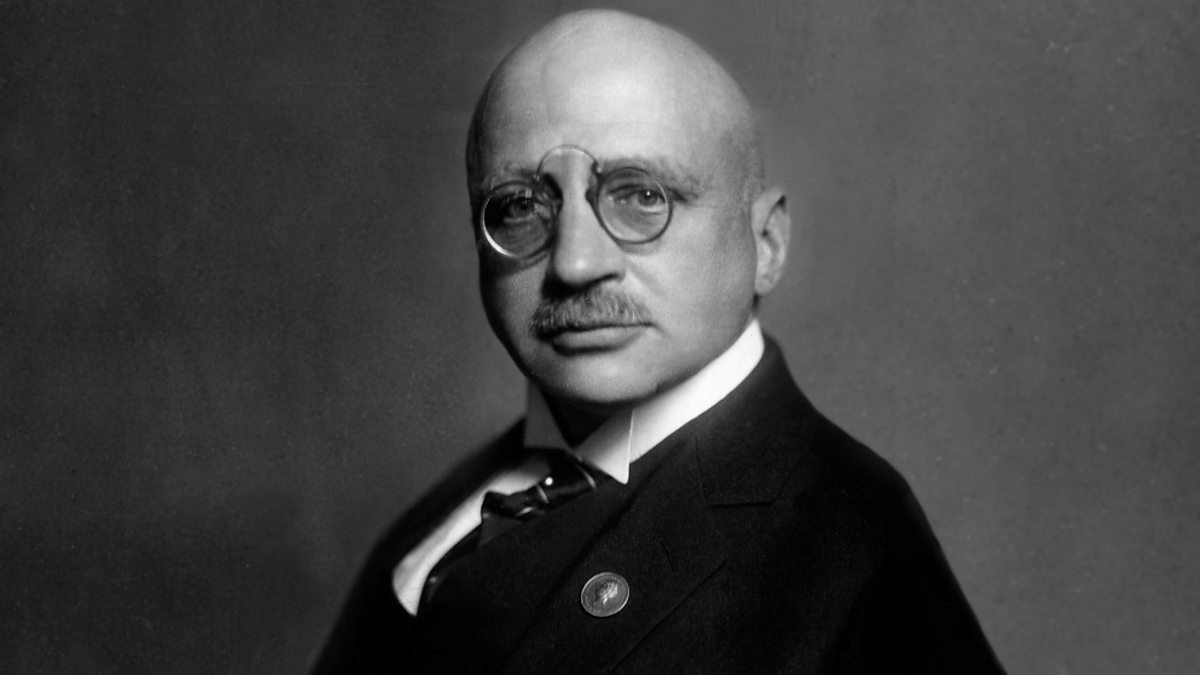
Science often celebrates brilliant discoveries that transform humanity. Yet some scientific achievements raise difficult ethical questions. Few scientists embody this contradiction more vividly than Fritz Haber. His work helped feed billions of people around the world, but it also contributed to the development of chemical weapons during wartime.
Haber’s life reveals how science can serve both humanity and destruction, depending on how knowledge is used.
Early Life and Education
Fritz Haber was born in 1868 in Breslau, then part of Germany (today Wrocław in Poland). He grew up in a prosperous Jewish family involved in the chemical trade. From an early age, Haber showed strong intellectual abilities and an interest in science.
He studied chemistry at several German universities, including the renowned University of Heidelberg, where he worked under the famous chemist Robert Bunsen, known for the Bunsen burner used in laboratories worldwide.
Haber later continued his academic career at the Karlsruhe Institute of Technology, where he began work that would change the world.
The Discovery that Fed the World
At the beginning of the twentieth century, humanity faced a serious problem: how to produce enough food for a rapidly growing global population.
Plants require nitrogen to grow, but atmospheric nitrogen gas is extremely stable and difficult for plants to use directly. Farmers relied heavily on natural sources such as Chilean nitrate deposits, which were limited.
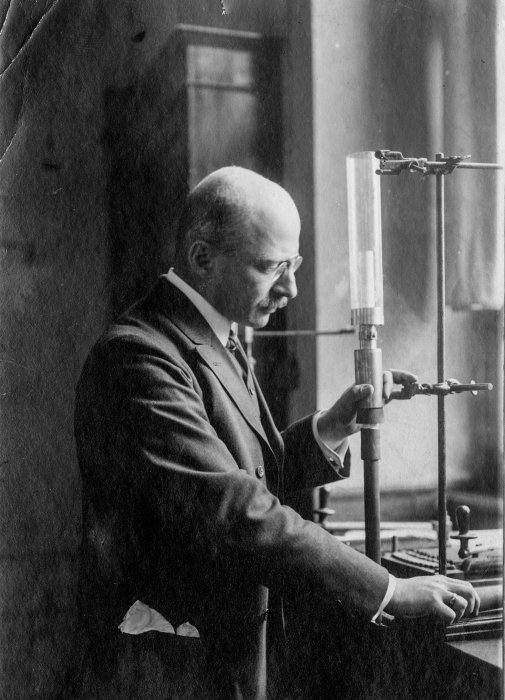
Haber solved this problem by developing a method to convert nitrogen from the air into ammonia. This discovery became known as the Haber–Bosch Process.
The process combines nitrogen and hydrogen under high pressure and temperature in the presence of a catalyst to produce ammonia. Industrial chemist Carl Bosch later scaled up Haber’s laboratory method for large-scale industrial production.
This innovation revolutionised agriculture because ammonia can be used to produce nitrogen fertilisers. Today, the Haber–Bosch process supports the production of fertilisers that feed billions of people.
Many historians of science estimate that nearly half of the world’s food supply today depends on nitrogen fertilisers produced using this method.
In recognition of his groundbreaking work, Haber received the Nobel Prize in Chemistry in 1918.
Franklin’s data was shown—without her knowledge or consent—to James Watson and Francis Crick, who were working at University of Cambridge. This breach of ethical practice was normalised within a culture that treated women’s labour as communal property rather than intellectual ownership.
Watson later portrayed Franklin dismissively in The Double Helix, reinforcing stereotypes of the “difficult woman scientist.” Such narratives did not merely reflect bias; they actively produced it, shaping how generations of readers understood scientific discovery.
Science and War
Despite this achievement, Haber’s legacy remains controversial because of his involvement in chemical warfare during World War I.
When war broke out in 1914, Haber believed it was his patriotic duty to support Germany. He became deeply involved in military research and led Germany’s chemical weapons programme.
Under his direction, scientists developed chlorine gas as a weapon. In 1915 German forces released chlorine gas during the Second Battle of Ypres. This attack caused widespread suffering and marked the beginning of large-scale chemical warfare.
Haber defended his actions by arguing that scientists should serve their country during wartime. However, many contemporaries condemned the use of poison gas as immoral and inhumane.
Personal Tragedy
Haber’s involvement in chemical warfare had devastating consequences in his personal life.
His wife, Clara Immerwahr, was herself a chemist and one of the first women in Germany to earn a doctorate in chemistry. She strongly opposed Haber’s work on chemical weapons.
Shortly after the first successful gas attack in 1915, Clara died by suicide using Haber’s military pistol. Many historians interpret her death as a protest against her husband’s role in chemical warfare, although the circumstances remain debated.
The tragedy has become one of the most poignant episodes in the history of science.
Later Career and Exile
After the war, Haber returned to scientific research and continued to make important contributions to chemistry. He became director of the Kaiser Wilhelm Institute for Physical Chemistry and Electrochemistry in Berlin.
However, political developments in Germany soon changed his life dramatically. With the rise of Adolf Hitler and the Nazi regime in 1933, Jewish scientists were forced out of German academic institutions.
Despite his patriotic service during the war, Haber was dismissed from his position because of his Jewish background.
Deeply disillusioned, he left Germany and spent his final years moving between different countries in search of academic work.
He died in 1934 in Basel, Switzerland.
A Legacy of Contradictions
The legacy of Fritz Haber remains deeply complex.
On one hand, the Haber–Bosch process transformed agriculture and allowed humanity to produce enough food for billions of people. Without it, modern civilisation might struggle to sustain its population.
On the other hand, Haber’s role in developing chemical weapons contributed to one of the darkest chapters in military history.
Historians and philosophers of science continue to debate how his life should be judged. Was he a patriot serving his country, or a scientist who crossed an ethical line?
Perhaps the most important lesson from Haber’s story is that scientific knowledge itself is neutral. The moral responsibility lies in how societies choose to use that knowledge.
Lessons for Modern Science
The story of Fritz Haber raises questions that remain relevant today.
Modern scientists work on technologies such as artificial intelligence, genetic engineering, and nuclear energy. Like Haber’s discoveries, these innovations have the potential to bring great benefits—but also serious risks.
Haber’s life reminds us that scientific progress must always be accompanied by ethical reflection and responsibility.
Science can feed the world, cure disease, and expand human knowledge. But it can also be used in ways that harm humanity.
The challenge for scientists and society is to ensure that knowledge serves the greater good.